Safety first. Wear eye protection and gloves. Keep sparks, flames and cigarettes away: lead-acid batteries can release hydrogen gas. Disconnect the negative (-) terminal first and reconnect it last. Never work on hybrid or EV high-voltage batteries. Follow your owner’s manual.
Replacing a standard 12V battery is a job many people can do in under half an hour, and it removes the labour from your car battery replacement cost. Work out what you would save with the replacement cost calculator before you start.
When not to DIY
- The battery is in the boot or under a seat and has a vent hose.
- Your car needs the new battery registered or coded (common on many BMW, Audi, VW and Mercedes cars). See battery registration and coding.
- The car is a hybrid or EV and you are tempted to touch anything orange or the traction battery. Never do this.
- You are not sure which battery type you need. Read AGM vs EFB vs flooded.
What you will need
- The correct replacement battery (group size, type and terminal layout from your manual or the old label).
- Gloves and eye protection.
- Spanners or a socket set, usually 10 mm and 13 mm.
- A terminal brush and a little terminal protector.
- A memory saver if your car loses settings (optional).
Steps
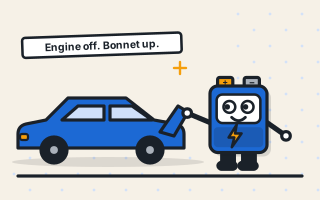
- Park on level ground, switch everything off and open the bonnet.
- Find the battery and note which terminal is which, and how the hold-down is fitted. Take a photo.

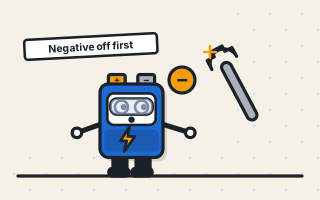
- Loosen and remove the negative (-) cable first. Tuck it away so it cannot touch the terminal.
-
Remove the positive (+) cable.
-
Undo the hold-down clamp and lift the battery out with both hands. It is heavy.

-
Clean the tray and cable ends with a terminal brush. See cleaning corrosion.
-
Fit the new battery, secure the clamp, then connect the positive (+) cable first and the negative (-) cable last.

-
Tighten both clamps so they do not move, and start the car.
-
Return the old battery for recycling. You may get your core charge back.
Troubleshooting
- Car will not start: check both clamps are tight and the battery is charged. Measure it with the voltage checker.
- Warning lights or lost settings: some cars need a relearn or battery registration.
- Sparks when connecting: stop and check that nothing is switched on.
FAQs
How long does it take? Usually 15 to 30 minutes.
Where do I take the old battery? Back to the seller or a recycling point; see core charges and recycling.
Choosing the replacement before you start
Do the shopping first, not on the driveway with the old battery out. Note the group size and terminal layout from the label (or use the group size finder), the battery type, and the cold cranking amps your manual specifies. Compare the total price with the calculator and check the fitting policy of the seller. If the store fits it free, you may prefer that to DIY.
Preparing the car
- Switch off the engine, lights and accessories, and remove the key. Some cars need a specific sequence; check the manual.
- If your car stores radio codes or settings, find the code first or use a memory saver connected to the cigarette lighter or OBD port, following its instructions.
- Take off any rings, watches and metal jewellery, because a metal object across the terminals can cause a severe burn.
- Have a clean rag and a small container for any corrosion residue.
Handling the old battery
A car battery is heavy, often around 15 to 20 kg, and contains acid. Lift with your legs, keep it upright, and carry it by the case, not the terminals. Put it somewhere it cannot tip, ideally in a plastic tray, and take it back for recycling. Your seller may refund a core charge when you return it. See core charges and battery recycling.
After fitting: checks that matter
- Make sure both clamps are tight and the battery cannot move in its tray.
- Start the car and check that dash lights behave normally. Some cars flash warnings after power loss and clear them after a drive.
- Reset clocks and any settings you lost.
- Measure charging voltage with the engine running using our voltage checker. If it is outside the usual range, have the charging system checked.
- Keep the receipt for the warranty, and use the warranty calculator if you ever need to claim.
Common mistakes
- Connecting the clamps the wrong way round. Positive goes to positive. Reversed polarity can damage electronics.
- Over-tightening clamps, which can crack terminals or damage the post.
- Forgetting to tighten the hold-down, letting the battery vibrate, which shortens its life.
- Ignoring corrosion on the cable ends. Clean them first: how to clean battery terminal corrosion.
- Buying the wrong type. A start-stop car needs AGM or EFB. See AGM vs EFB vs flooded.
Is DIY really worth it?
It depends on what fitting would cost you otherwise. Walmart installs its own batteries free and many parts chains fit with purchase, so the labour you save may be small. The DIY savings calculator puts your own numbers side by side and warns you when DIY is not recommended.